Security Camera Placement in Parking Lots: Protect Your Property and Customers
Summary: Strategic security camera placement in parking lots protects against theft, vandalism, and liability claims while creating a safer environment for customers and employees. Strategic positioning ensures complete coverage of entry points, high-risk zones, and vehicle traffic patterns, without leaving any blind spots. Effective camera placement deters criminal activity, provides clear evidence when incidents occur, and demonstrates your commitment to safety. Working with a local Colorado Springs provider ensures your system accounts for regional lighting conditions and weather challenges.
Your Parking Lot Is More Vulnerable Than You Think
You’ve invested in security cameras for your parking lot, but are they actually protecting your property? Many business owners discover too late that their camera system has critical blind spots, poor angles that can’t identify license plates, or inadequate coverage of high-risk areas where theft and vandalism occur most frequently.
The consequences of poor security camera placement in parking lots go beyond property damage. You face potential liability claims from customers injured in poorly monitored areas, insurance disputes when you can’t provide clear footage, and lost business as customers avoid facilities that don’t feel safe. Vehicle break-ins, catalytic converter theft, hit-and-runs, and assaults happen in parking lots across Colorado Springs every day—and without proper camera coverage, you have no way to identify perpetrators or protect yourself from false claims.
Strategic camera placement transforms your parking lot from a vulnerable liability into a well-monitored asset. When cameras cover the right areas with proper angles and positioning, you deter criminal activity, capture actionable evidence, and create an environment where customers and employees feel secure.
Related: Security Cameras for Multi-Tenant Commercial Spaces in Colorado Springs
The Cost of Getting Camera Placement Wrong
Poor security camera placement in parking lots creates a false sense of security that’s often worse than having no cameras at all.
- Blind spots and coverage gaps: Improperly spaced cameras leave entire sections unmonitored, creating opportunities for theft, vandalism, and assaults in areas that criminals quickly identify and exploit.
- Unusable footage: Cameras positioned at wrong angles or heights capture footage that can’t identify faces, read license plates, or provide details insurance companies and law enforcement need.
- Lighting challenges: Cameras placed without considering sun position, building shadows, or nighttime lighting produce washed-out daytime footage and completely dark nighttime recordings.
- Liability exposure: When incidents occur in areas your cameras should cover but don’t, you face increased liability claims and potential negligence accusations.
- Wasted investment: Spending thousands on security equipment that doesn’t effectively monitor your property means you’re paying for protection you’re not receiving.
Read More: Is it Time to Replace Your Business Security Camera System?
Essential Zones for Security Camera Placement in Parking Lots
Effective parking lot surveillance requires comprehensive coverage of specific zones where incidents most commonly occur and where evidence collection is most critical.
Entry and Exit Points
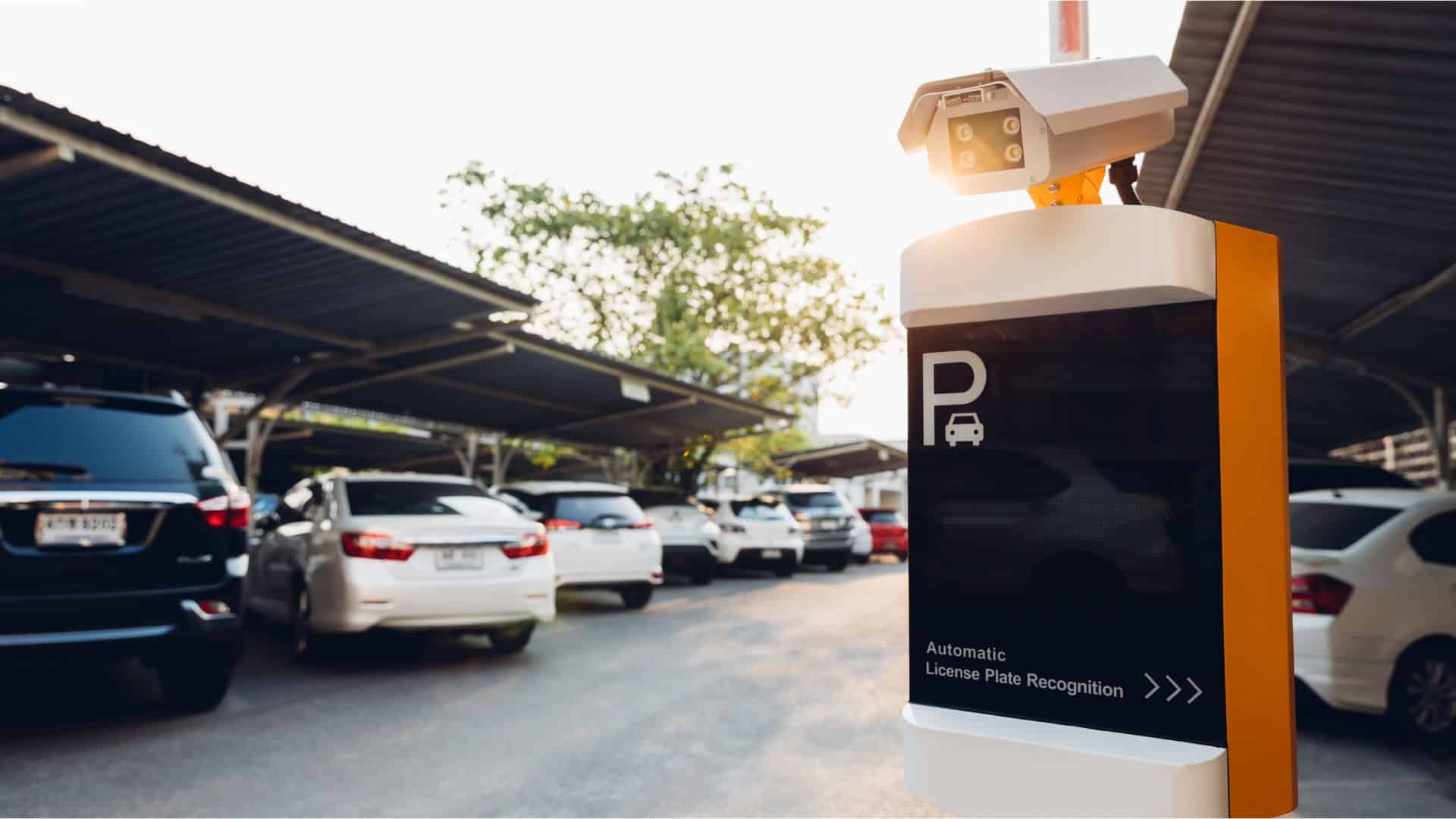
Entry and exit points are the most critical areas determining security camera placement in parking lots. Position cameras to capture clear frontal views of every vehicle entering and exiting, ensuring license plates are readable in all lighting conditions. Mount cameras at appropriate heights and angles that account for vehicle size variations, from compact cars to large trucks.
Payment Stations and Kiosks
Payment areas attract criminal activity because customers are distracted, handling cash or cards, and often alone. Install cameras with clear views of payment station faces to capture user interactions and any tampering attempts. Position additional cameras to monitor the immediate surrounding area where robberies or assaults most commonly occur.
High-Value Parking Areas
Spaces closest to building entrances, handicapped parking zones, and areas where expensive vehicles typically park require concentrated camera coverage. These locations experience higher rates of vehicle break-ins, catalytic converter theft, and vandalism. Proper security camera placement in parking lots in these zones should monitor multiple spaces simultaneously while maintaining sufficient detail to identify perpetrators.
Pedestrian Walkways and Perimeter Areas
Areas where customers walk between their vehicles and your building need clear monitoring to protect liability and ensure customer safety. Position cameras along main pedestrian routes to document slip-and-fall incidents and assaults. Your parking lot’s outer boundaries are where unauthorized access occurs, so install cameras covering fence lines, rear access points, and property boundaries that criminals use to enter or exit.
Dark Corners and Poorly Lit Zones
Poorly lit areas become crime magnets where perpetrators know they’re less visible. Effective security camera placement in parking lots must specifically address areas with inadequate lighting, corners where shadows create concealment, and spaces behind dumpsters or utility structures. These cameras often require enhanced low-light capabilities or infrared technology to capture usable footage.
Critical Factors for Effective Camera Positioning
Beyond knowing which zones to monitor, successful security camera placement in parking lots requires attention to technical factors that determine whether your footage will be useful when you need it most.
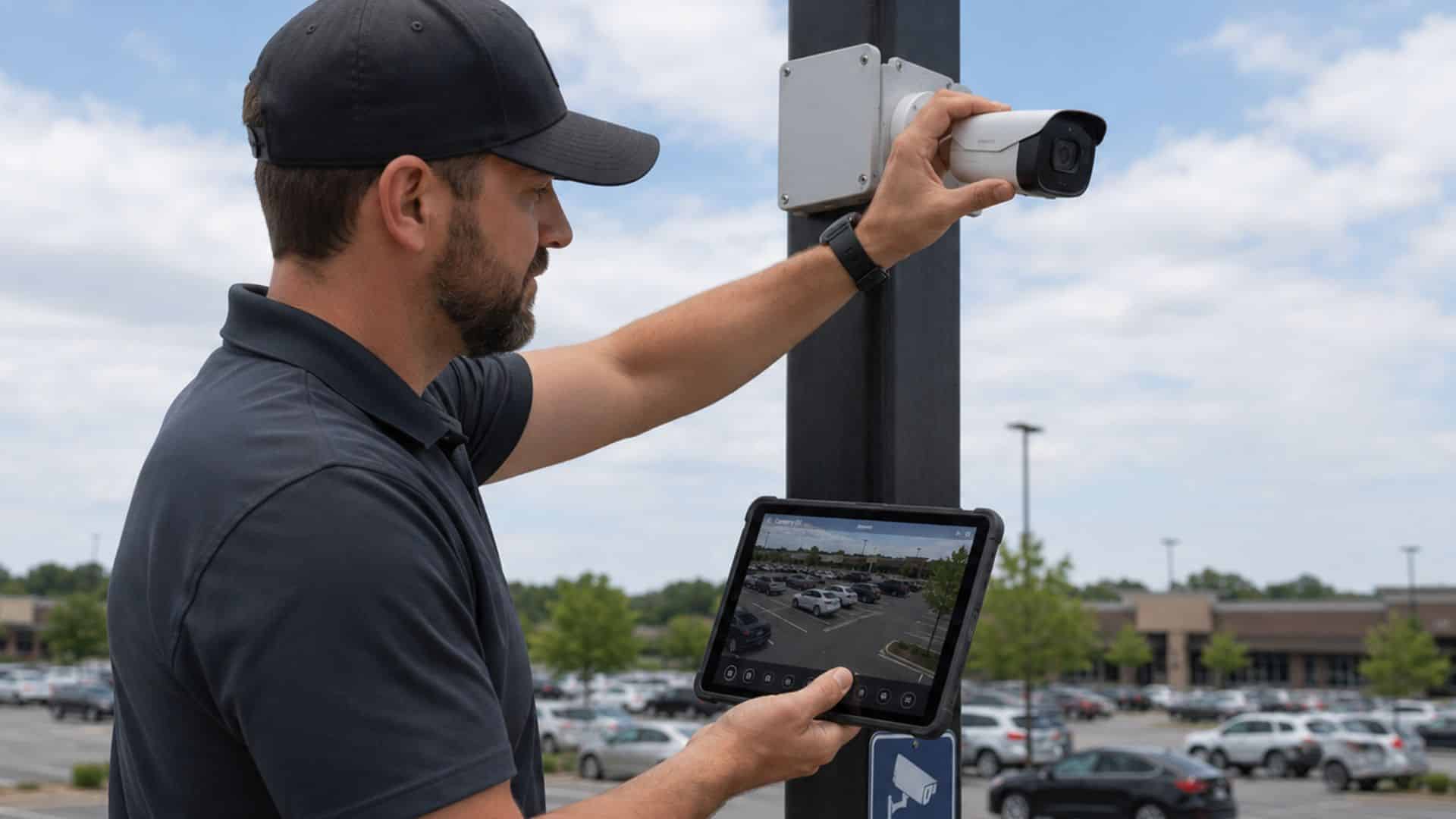
- Height and angle considerations: Mount cameras high enough to prevent tampering but low enough to capture facial details and license plates clearly. Angles should account for vehicle heights, lighting conditions, and the specific details you need to capture in each zone.
- Lighting and exposure management: Consider sun position throughout the day, artificial lighting at night, and seasonal changes that affect visibility to ensure cameras produce clear footage in all conditions.
- Overlapping coverage zones: Strategic overlap between camera views eliminates blind spots and ensures continuous tracking as subjects move through your parking lot. Overlap also provides backup coverage if one camera fails.
- License plate capture optimization: Dedicated license plate cameras require specific positioning perpendicular to traffic flow at distances and heights optimized for plate recognition.
- Weather protection and durability: Cameras must withstand temperature extremes, UV exposure, storms, and blowing dust. Position cameras where they’re protected from direct weather exposure when possible while maintaining necessary coverage angles.
You Might Like: Maximizing Your Security: Strategic Placement of CCTV Cameras to Deter Shoplifting
Common Placement Mistakes in Colorado Parking Lots
Understanding what doesn’t work helps you avoid costly mistakes that compromise your parking lot security.
- Insufficient camera quantity: Attempting to cover large parking areas with too few cameras creates gaps that criminals exploit. Proper coverage requires adequate camera density based on your lot’s size, layout, and risk factors.
- Wrong camera types for conditions: Using standard cameras in areas that require specialized equipment, such as license plate recognition or low-light cameras, produces inadequate footage.
- Ignoring seasonal changes: Camera positions that work perfectly in winter may face direct sun exposure in summer, washing out footage during critical daylight hours.
- Focusing only on vehicles: Effective security camera placement in parking lots requires monitoring both vehicles and people. Cameras positioned only to capture vehicles miss pedestrian incidents and activities occurring between parked cars.
- Inadequate nighttime coverage: Daytime-only planning ignores that many parking lot crimes occur after dark, when visibility is reduced.
Why Choose System Links Colorado for Parking Lot Camera Installation
When you need professional security camera placement in parking lots, working with a local Colorado Springs provider offers distinct advantages over national companies or DIY installation attempts.
- Site-specific assessment: We evaluate your parking lot’s unique layout, lighting conditions, traffic patterns, and vulnerability points to design camera placement that addresses your specific security needs.
- Local weather knowledge: Our experience with Colorado Springs’ environmental conditions ensures camera positioning that maintains performance year-round.
- Rapid response and service: When cameras need adjustment, maintenance, or troubleshooting, we’re minutes away—not waiting for regional technicians to fit you into corporate schedules.
- Proven local reputation: As a locally owned business, our success depends on your satisfaction and our community reputation. We’re invested in delivering camera placement that actually protects your property and customers.
Secure Your Parking Lot with Professional Camera Placement
Don’t leave your parking lot security to chance with poorly positioned cameras that create a false sense of security while leaving you vulnerable. Professional security camera installation eliminates blind spots, captures actionable evidence, and creates the safe environment your customers and employees deserve.
At System Links Colorado, we specialize in designing and installing parking lot surveillance systems that provide comprehensive coverage tailored to your property’s specific challenges. Our team conducts thorough site assessments, recommends optimal camera types and positions, and ensures your system delivers the protection you’re investing in.
Whether you’re planning a new parking lot security system or need to improve existing camera coverage, we’re here to help. Contact System Links today to schedule your parking lot security assessment. Let us help you create a parking environment where safety and security are genuine protection you can count on.
FAQs: Effective Security Camera Placement in Parking Lots
How many cameras do I need for proper security camera placement in parking lots?
The number of cameras depends on your parking lot’s size, layout, entry points, and specific security concerns. As a general guideline, plan for one camera per 20-30 parking spaces for basic coverage, with additional cameras for entry points, payment areas, and high-risk zones. Contact System Links for a professional assessment that determines the optimal camera quantity and positioning for your specific property.
What camera features are most important for parking lot surveillance?
Parking lot cameras need weather-resistant housings, a wide dynamic range to handle challenging lighting conditions, infrared or low-light capabilities for nighttime monitoring, and sufficient resolution to identify faces and license plates. Dedicated license plate recognition cameras require specialized features different from general surveillance cameras.
Can I add cameras to improve my existing parking lot security system?
Absolutely. Many parking lot security systems have coverage gaps that additional cameras can address without replacing your entire system. We assess your current camera placement, identify blind spots and inadequate coverage areas, and recommend strategic camera additions that integrate with your existing equipment.
How do I ensure cameras capture license plates clearly?
License plate capture requires dedicated cameras positioned perpendicular to traffic flow at specific distances and heights optimized for plate recognition. These cameras need narrow fields of view, high shutter speeds to eliminate motion blur, and proper angle alignment. Proper security camera placement in parking lots includes specialized license plate cameras at entry and exit points, separate from your general surveillance coverage.